

Whether you’re flying a drone for aerial photography, surveying farmland, inspecting infrastructure or simply enjoying a weekend flight, the battery has a big say in how things go. Flight time, performance, reliability and safety all depend on the battery you’re using.
Weather conditions make battery choice even more important. Hot summers, dusty environments and remote work sites can all affect how drone batteries perform. A battery that’s fine for short recreational flights may not suit a commercial drone working for hours in remote or demanding environments across the US.
If you’re trying to understand the different battery types, what the specifications mean and how to get more from each charge, here’s what you need to know.
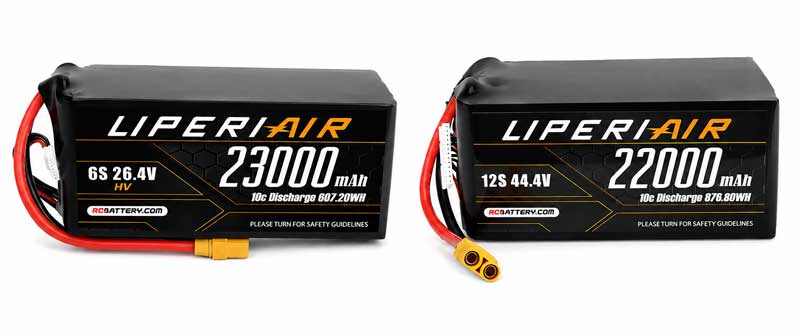
Not Every Drone Battery Is the Same
Most drones use lithium-based batteries because they store plenty of energy without adding too much weight. But different battery types suit different jobs.
It’s easy to assume a bigger battery automatically means a longer flight. That’s not always the case. Larger batteries weigh more, which means the motors have to work harder to keep the drone airborne. At some point, the extra weight starts eating into the additional flight time.
Choosing the right battery for drone use is therefore about balancing capacity, weight and power rather than simply buying the biggest pack available.
Also Read – 3S Lipo Battery: Voltage, Performance, And Best Uses (RC Planes, Cars, And FPV)
Why LiPo Batteries Are So Popular
If you’ve spent any time around drones, you’ve probably come across LiPo batteries. There’s a reason drone LiPo batteries are so widely used.
LiPo, or lithium polymer, batteries can deliver a lot of power without being excessively heavy. That’s useful when a drone needs to climb quickly, carry a camera or maintain position in gusty weather.
Their main advantages include:
- High power output
- Relatively low weight
- Quick response to changing power demands
- Plenty of capacity and voltage options
The trade-off is that LiPo batteries need some care. They don’t respond well to overcharging, being discharged too far or sitting in extreme heat.
They’re not difficult to maintain, though. Good charging and storage habits can help you get plenty of useful life from a quality LiPo pack.
What About Lithium-Ion Batteries?
Li-ion batteries are becoming more common in drones designed for endurance rather than outright power.
Think about a mapping drone moving steadily over farmland. It doesn’t necessarily need the sudden bursts of current that an FPV racing drone does. In this case, staying in the air longer may be more valuable than rapid acceleration.
Li-ion batteries can offer good endurance, but they generally can’t match the high discharge performance of LiPo batteries. That makes them less suitable for some racing, heavy-lift and high-performance drones.
Neither type is automatically better. It comes down to how you’re using the aircraft.
Also Read – How Custom Lithium Battery Packs Elevate UAV Performance
Understanding the Numbers
Battery specifications can look technical, but the main figures are fairly straightforward.
Capacity (mAh)
Capacity is usually shown in milliamp-hours (mAh) and tells you how much electrical charge the battery can store.
Higher capacity can mean longer flights, but remember the extra weight. The battery with the biggest mAh number isn’t always the best choice.
Voltage
You’ll often see batteries labelled 3S, 4S, 6S or higher. The “S” refers to the number of cells connected in series.
More cells mean higher voltage. Your motors, ESCs and other electronics must be compatible with that voltage, so always check your drone’s specifications before changing battery types.
Also Read – UAV Battery: Modern Technologies and Future Prospects
C Rating
The C rating tells you how quickly a battery can safely deliver its stored energy.
For relaxed recreational flying, a very high C rating may not matter much. For FPV drones, heavier payloads or aggressive flying, it becomes more important because the motors may need a lot of power in a short period.
What Actually Affects Flight Time?
Advertised flight times are useful for comparison, but they’re usually measured under controlled conditions. Real-world flying is different.
Actual flight time can depend on:
- Battery capacity
- Wind
- Drone weight
- Flying style
- Payload
- Temperature
- Altitude
A calm flight over open farmland will generally use less energy than fighting coastal winds with a heavy camera attached.
Temperature also matters. Leaving batteries inside a hot ute or parked car during an Australian summer can speed up battery ageing, even if there isn’t an obvious problem straight away. Cold mornings can temporarily reduce performance too.
So if your flight time changes from one day to another, the battery isn’t necessarily faulty. The conditions may simply be different.
Also Read – What RC Battery Connector Should I Use?
Choosing the Right Drone Battery and Charger
Your drone battery and charger should work together. Even a quality battery can have a shorter life if it’s repeatedly charged incorrectly.
Depending on the battery type, a suitable charger may include:
- Cell balancing
- Overcharge protection
- Storage mode
- Adjustable charging rates
- Temperature monitoring
Storage mode is particularly useful. If you aren’t planning to fly for a while, leaving a LiPo battery fully charged isn’t ideal. Bringing it to the manufacturer’s recommended storage voltage puts less stress on the cells.
It seems like a small detail, but over months of regular use, good storage habits can make a difference.
Battery Safety Isn’t Something to Ignore
Lithium batteries are generally reliable, but they store a lot of energy in a small package.
Before every flight, take a few seconds to inspect the battery. If it’s swollen, damaged, leaking or unusually hot, don’t put it back into the drone.
A few simple habits are worth following:
- Let batteries cool before charging.
- Don’t leave charging batteries unattended.
- Use appropriate fire-resistant storage or charging protection.
- Avoid completely draining the battery.
- Keep batteries away from excessive heat and direct sunlight.
For commercial operators, these checks can simply become part of the normal pre-flight routine.
Also Read – What Do the Numbers Mean? (S, C, mAh)
Getting More Life Out of Your Batteries
Every rechargeable lithium battery eventually loses capacity. You can’t stop that completely, but you can slow it down.
If you fly regularly, rotate between several batteries instead of relying on the same pack every time. Keep connectors clean, use the correct charger and avoid storing batteries fully charged for long periods.
You may notice flight times gradually getting shorter after many charge cycles. Some capacity loss is normal. Sudden changes are more concerning.
If a battery starts giving inconsistent flight times, becomes badly unbalanced or shows physical damage, replacing it is usually safer than trying to squeeze a few more flights from it.
Final Thoughts
Choosing the right drone batteries isn’t just about getting another minute or two in the air. The right battery makes your drone more predictable and gives you one less thing to worry about while flying.
What works best depends on the job. Someone filming landscapes on the weekend has different requirements from a survey crew covering farmland or a technician inspecting infrastructure in remote Australia.
At RC Battery, we supply battery solutions for a range of real-world drone applications. Whether you need a dependable battery for drone use, high-performance drone LiPo batteries, or a compatible drone battery and charger, we can help you find an option suited to your aircraft and the way you fly. Reliable power means fewer interruptions and more useful time in the air.