

LiPo and LiHV batteries are two widely used power options for drones, and they are often sold in the same size, with the same connector and at similar prices. However, they differ in charge voltage, energy capacity and charging requirements, so choosing the wrong one can affect both performance and safety. This guide compares LiPo and LiHV drone batteries in detail. It explains how each type works, where each one performs best and what to check before you buy, so that you can select the right battery for your drone.
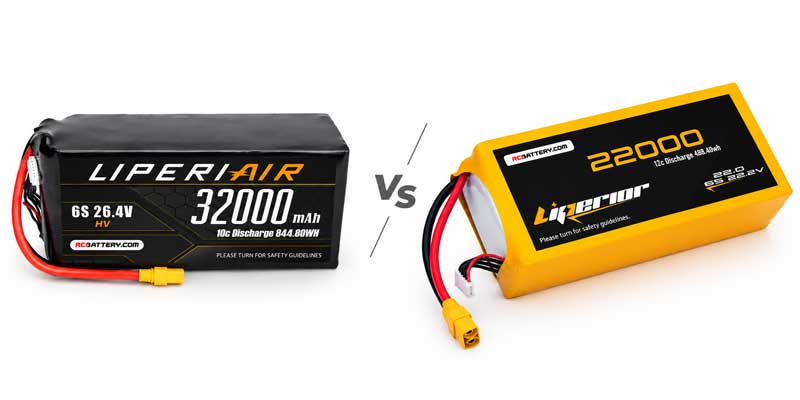
What Is a LiPo Drone Battery?
A LiPo, or lithium polymer, battery is the most common power source for hobby drones, FPV quadcopters and RC aircraft. Each cell has a nominal voltage of 3.7V and is charged to a maximum of 4.2V. In addition, the lightweight pouch design supports the high discharge rates needed for fast climbs and sharp turns. Because this chemistry is so widely used, replacement packs and compatible chargers are also easy to find.
What Is a LiHV Drone Battery?
LiHV stands for lithium high voltage. It is built on the same pouch cell design as LiPo, but the cathode material is modified so that each cell can be charged to 4.35V instead of 4.2V. As a result, the nominal voltage rises to 3.8V per cell, and the pack can store more energy without any increase in size or weight. Some manufacturers also offer cells rated at 3.85V or 3.95V for professional drones.
LiPo vs LiHV Specifications at a Glance
The table below summarises the technical points. Performance is then explained in the next section.
| Feature | LiPo | LiHV |
| Maximum charge voltage per cell | 4.20V | 4.35V |
| Nominal voltage per cell | 3.7V | 3.8V |
| Full voltage of a 6S pack | 25.2V | 26.1V |
| Charger setting | Standard LiPo | LiHV |
| Typical price | Lower | Slightly higher |
How LiHV and LiPo Perform in the Air
The higher charge voltage gives LiHV packs three practical advantages.
First, more energy. A LiHV pack holds roughly 10% more energy than a LiPo pack of the same size and weight. For a camera drone that typically flies for 20 minutes on a LiPo battery, this could mean up to two additional minutes of flight time under ideal conditions. However, actual flight time will vary depending on factors such as weather, payload and flying style.
Second, more power. Power equals voltage multiplied by current, so at the same current draw, a higher voltage delivers more power to the motors.
Third, less voltage sag. Every battery loses some voltage for a moment when the throttle is pushed hard. Because a LiHV pack starts higher, however, it stays higher during that drop. As a result, a freestyle pilot making repeated fast climbs may notice steadier motor response.
Drawbacks of LiHV Batteries for Drones
However, the higher voltage also limits the usage that every buyer should check. First is electronics compatibility. The ESC and flight controller must be rated for the higher voltage. For instance, a 6S LiPo pack peaks at 25.2V, while a 6S LiHV pack peaks at 26.1V. Therefore, check the voltage rating printed on your electronics before buying.
Second, cycle life. LiHV packs may wear a little faster if they are regularly charged to full and left that way. For this reason, it helps to charge to full only shortly before you fly. Third, price. LiHV packs usually cost slightly more than LiPo packs of the same capacity.
How to Charge and Handle LiPo and LiHV Packs Safely
Beyond performance and compatibility, charging is the stage that needs the most care with either type. For this reason, use a charger with a LiHV mode. Never charge a standard LiPo pack on the LiHV setting, because 4.35V per cell is above its safe limit. Charging a LiHV pack on the LiPo setting, on the other hand, is not a safety risk, but it stops at 4.2V per cell and wastes the extra capacity. The GetFPV drone battery safety guide gives the same limits, with 4.2V per cell for LiPo and 4.35V for LiHV.
In practice, the following steps keep charging safe:
- Select the chemistry and cell count manually instead of relying on auto-detect.
- Charge at 1C unless the manufacturer states otherwise, which means a 1500mAh pack charges at 1.5A.
- Connect the balance lead and use balance charge mode.
- Charge in a fireproof bag or container, away from flammable items, and stay nearby.
- Do not use a pack that looks swollen or damaged.
After flying, use storage mode if the pack will rest for more than a few days, which brings it to about 3.8V per cell. When travelling, the FAA’s PackSafe lithium battery guidance also states that spare lithium batteries must be carried in carry-on baggage only and that lithium-ion batteries can overheat. Therefore, check your airline and local rules before you fly.
LiPo or LiHV: Which Should You Choose?
With these points in mind, choose LiHV when flight time or power matters most and your charger, ESC and flight controller all support 4.35V per cell. For example, a pilot flying a long range 6S build who wants every spare minute is a good fit.
Choose LiPo, on the other hand, when you want a simple, low cost and widely compatible pack. For example, a beginner flying a 4S quad on a standard charger gains little from LiHV and avoids the risk of choosing the wrong charger setting.
If you cannot confirm that your equipment supports 4.35V per cell, LiPo is therefore the safer choice. In the end, the better battery is the one that matches your equipment and the way you fly.
Winding Up
Once you have chosen a type, confirm four details on the product page. First, match the cell count to your drone, such as 4S or 6S. Second, choose a capacity in mAh that keeps the pack within your weight limit. Third, check that the discharge rating, shown as a C rating, covers the peak current your motors draw. Finally, confirm that the connector matches your drone, or plan to change it safely.
If you are unsure which pack suits your build, the team at RC Battery can help. Browse our LiPo and drone battery range or contact us for advice on voltage, capacity and discharge rating.