

When people think about UAV (Unmanned Aerial Vehicle) performance, the airframe, motors and flight controller usually get most of the attention. But anyone who regularly works with drones knows how much the battery matters.
Whether you’re mapping a construction site, inspecting power lines, capturing aerial footage or delivering supplies, the battery affects how far the UAV can fly, what it can carry and how reliably it performs. Sometimes, a few extra minutes in the air can mean completing a job in one flight instead of landing halfway through to change batteries.
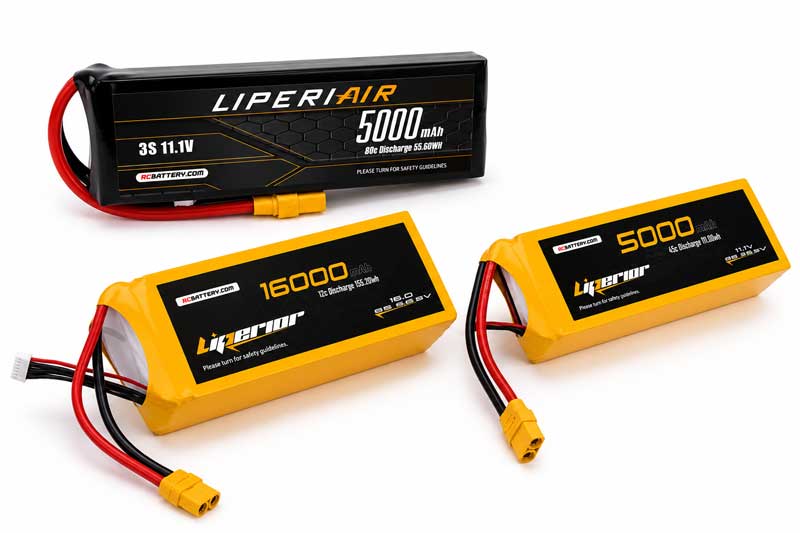
That’s why more UAV manufacturers are considering custom lithium battery packs rather than relying entirely on standard options. A battery designed around the aircraft and its workload can improve endurance and reliability without adding weight that isn’t needed.
Why the Right UAV Battery Matters
Unlike a ground vehicle, a UAV has to carry every gram of its own weight through the air. Add a heavier battery and the motors need more energy just to keep the aircraft flying.
A good battery for UAV applications needs to balance:
- High energy density
- Low weight
- Strong power output
- Stable voltage
- Good cycle life
- Reliable thermal performance
The tricky part is that these factors affect one another. Adding capacity usually adds weight, while a battery designed for very high discharge rates may not provide the best endurance.
A custom pack can be designed around the UAV’s actual requirements instead of making the aircraft work around a generic battery.
Longer Flight Time Without Unnecessary Weight
Flight time matters for almost every UAV, particularly commercial aircraft. Modern lithium cells can store plenty of energy for their size, but cell chemistry isn’t the only factor. Pack configuration, wiring, connectors, enclosures and battery management components all add weight. A well-designed custom battery aims to provide the energy the aircraft needs without unnecessary bulk.
The difference becomes noticeable in real work. A mapping UAV may cover another section of farmland before returning. An inspection drone could finish more of a transmission line in one flight. Search-and-rescue teams may gain valuable extra time over a search area.
Over a full working day, fewer landings and battery swaps can also reduce downtime.
More Room for the Payload
Every UAV has a maximum takeoff weight. Once you account for the airframe, motors, electronics and battery, whatever remains is available for the payload.
Industrial UAVs may carry:
- LiDAR sensors
- Thermal cameras
- High-resolution cameras
- Agricultural spraying equipment
- Delivery packages
A custom UAV drone battery can provide the required power without carrying more battery mass than necessary. This leaves more of the weight allowance for the equipment doing the actual work. For some aircraft, even a small reduction in battery weight can be useful.
Consistent Power When It’s Needed
Different UAVs put very different demands on their batteries.
A heavy-lift drone may need a large burst of power during takeoff. A surveying UAV may spend most of its flight cruising steadily, where stable voltage and endurance matter more.
A poorly matched battery can result in voltage drops, excess heat and inconsistent performance. With custom lithium battery packs, voltage, capacity, cell configuration and discharge capability can be selected around the aircraft’s actual power profile. For operators, that means more predictable performance when the UAV is working hard.
Smarter Batteries Can Improve Safety
Modern UAV batteries can do more than simply store energy. Many use a Battery Management System (BMS) to monitor what’s happening inside the pack.
Depending on the design, a BMS may track:
- Cell voltage
- Temperature
- Current
- State of charge
- Cell balance
It can help protect against problems such as overcharging, over-discharging, overheating and excessive current.
This becomes particularly useful in commercial fleets, where operators may be managing many batteries at once. Better information about battery condition can make it easier to identify a pack that’s starting to behave differently.
A BMS doesn’t replace sensible charging practices or regular inspections, but it provides another useful layer of protection.
Designed to Fit the Aircraft
One benefit of a custom battery that’s easy to overlook is the physical fit. Commercial UAVs come in many layouts, from compact multirotors to fixed-wing aircraft and large VTOL platforms. Designing an aircraft around an existing battery size can lead to compromises in available space and weight distribution.
A custom pack takes the opposite approach. It can be configured around the space available in the UAV. That makes it easier to position the battery near the desired centre of gravity and use internal space efficiently. It may also reduce the need for extra mounting hardware. These details sound small, but they can make the overall aircraft design more practical.
Lower Costs Over Time
The cheapest battery isn’t necessarily the cheapest one to operate. A poorly matched pack may experience excessive current, heat or other stresses that shorten its useful life. That means more replacements and additional downtime.
A properly matched custom battery can help reduce unnecessary stress on the cells. Actual battery life will still depend on chemistry, charging habits, operating temperature, depth of discharge and storage.
For a company running several UAVs, those differences add up. Replacing one battery may not seem like a major expense, but regularly replacing packs across an entire fleet is another story.
Built for Real Working Conditions
Commercial drones don’t always get calm skies and mild temperatures. Agricultural UAVs may spend hours working in hot and dusty conditions. Inspection drones can face cold weather and strong winds. Mining and infrastructure projects may take aircraft far from workshops or replacement equipment.
Custom packs can take these conditions into account through cell selection, enclosure design, thermal management and suitable protection features.
A battery designed for an agricultural spraying drone in a hot climate may need different characteristics from one used in a long-range inspection aircraft operating in colder conditions. That’s where customization becomes useful.
Why Custom Batteries Matter for UAVs
Battery technology continues to improve, with higher-energy cells, better monitoring and smarter charging systems becoming available. But improving the cell itself is only part of the job. How the complete battery system works with the aircraft matters too.
Instead of forcing a UAV to adapt to a standard battery, manufacturers can design the pack around the aircraft, payload and expected operating conditions. For commercial applications, that can mean longer flights, more usable payload capacity and more consistent performance.
Power Your Next UAV with RC Battery
Every UAV has different power requirements. A mapping aircraft, agricultural drone and heavy-lift platform aren’t doing the same job, so their batteries shouldn’t automatically be the same either.
At RC Battery, we provide custom lithium battery packs for specific UAV applications. From cell selection and pack configuration to battery management and physical design, we work with manufacturers and businesses to develop solutions suited to their aircraft and operating requirements.
If you’re looking for a custom UAV battery instead of trying to make a standard pack fit your aircraft, get in touch with RC Battery to discuss your requirements.