

If you are an RC enthusiast, you might have encountered this question – which RC battery type is better: LiPo or NiMH? Both are equally popular, recommended, versatile and efficient and that’s why the confusion. And if you ask us, there is no one universally better option. The right battery type for your vehicle depends entirely on your expectations and your experience.
If you are a beginner looking for an affordable, durable and low-maintenance option, a NiMH battery is often a sensible starting point. On the other hand, if you’re chasing maximum speed, stronger acceleration and longer run times, LiPo batteries are usually the preferred choice among experienced hobbyists.
But there’s more to it than simply choosing the “faster” battery. Performance, maintenance, safety, charging habits and budget all play a role.
Let’s take a closer look.
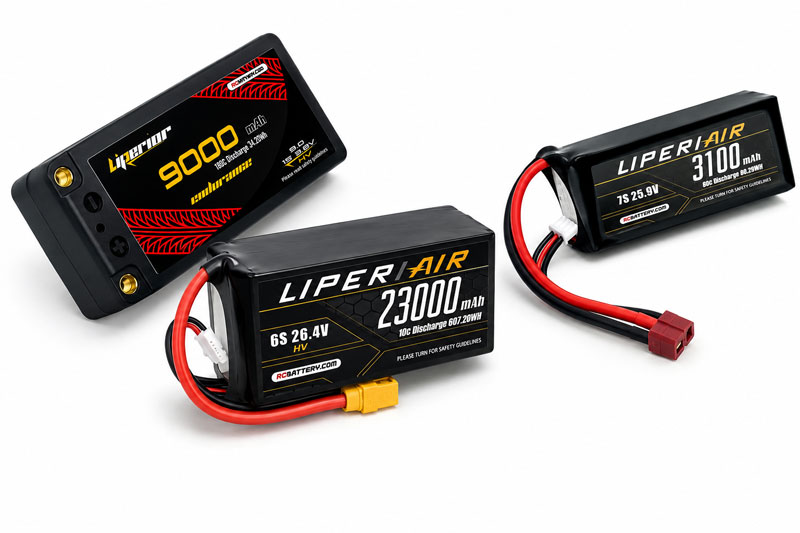
Understanding LiPo Batteries
LiPo, short for Lithium Polymer, has become the go-to battery technology for many modern RC vehicles. Whether it’s an RC car tearing through a dirt track, a racing drone, or a high-performance RC boat, chances are it’s powered by a LiPo pack.
One of the biggest reasons for this popularity is power delivery. LiPo batteries can discharge energy very quickly, which translates to stronger acceleration and more responsive performance.
You might notice the difference almost immediately when switching from NiMH to LiPo. The vehicle feels more alive. Throttle response is sharper and maintaining higher speeds becomes easier, particularly on larger tracks or rough terrain.
Some key advantages of LiPo batteries include:
- Higher energy density
- Lighter weight
- Faster acceleration
- Longer run times in many setups
- Better power output under load
However, that performance comes with added responsibility. LiPo batteries require proper charging equipment, safe storage and careful handling. Overcharging, puncturing or discharging them too far can damage the battery and, in extreme cases, create safety risks.
For hobbyists willing to follow the correct procedures, this usually isn’t a major issue. But it’s something worth considering before making the switch.
Also Read – What Do the Numbers Mean? (S, C, mAh)
Understanding NiMH Batteries
NiMH stands for Nickel-Metal Hydride. For many RC enthusiasts, this is where the hobby begins. NiMH batteries have been around for years and remain a reliable option for beginners, casual users and anyone who values simplicity over outright performance.
One of the biggest advantages of NiMH packs is how forgiving they are. They don’t require the same level of monitoring as LiPo batteries, and they generally handle everyday use without much fuss.
If you’re buying an RC vehicle for a child, using it occasionally on weekends, or simply don’t want to worry about storage voltages and specialised chargers, NiMH can make a lot of sense.
Benefits of NiMH batteries include:
- Lower upfront cost
- Easier maintenance
- More forgiving charging process
- Durable construction
- Suitable for beginners
That said, NiMH batteries are heavier and less energy-dense than LiPo batteries. As a result, vehicles powered by NiMH packs often feel slower and may have shorter run times depending on the setup.
For many casual users, this isn’t a deal-breaker. In fact, some drivers prefer the smoother power delivery because it makes vehicles easier to control.
LiPo vs NiMH: Key Differences
When comparing RC battery types, a few differences stand out straight away.
Performance
This is where LiPo batteries generally take the lead. Because they can deliver power more efficiently, vehicles often achieve:
- Faster top speeds
- Better acceleration
- Stronger torque
- More consistent performance during the run
If you’re racing competitively or pushing your RC vehicle to its limits, LiPo batteries usually provide the edge. NiMH batteries still perform well, but they’re not typically chosen for maximum performance.
Also Read – The Risks of Parallel Charging: Do’s and Don’ts
Weight
Weight matters more than many beginners realise. A lighter battery means less overall mass for the motor to move. This can improve acceleration, handling and efficiency.
LiPo batteries are significantly lighter than equivalent NiMH packs, which is one reason they are widely used in racing and performance-focused setups.
Maintenance
This category generally favours NiMH batteries. They are straightforward to use and don’t require the same level of attention during charging and storage.
LiPo batteries need:
- Balance charging
- Proper storage voltage
- Safe storage conditions
- Monitoring during charging
For experienced users, these steps become routine. For beginners, it can feel like extra work.
Cost
NiMH batteries are usually cheaper to purchase. LiPo batteries often cost more initially, and you may also need:
- A compatible LiPo charger
- A balance charging system
- Storage bags or containers
While the upfront investment is higher, many hobbyists feel the performance benefits justify the additional cost.
Also Read – How to Recover a “Dead” LiPo (Low Voltage Recovery Guide)
Which Battery Lasts Longer?
This question comes up a lot, and the answer depends on what “lasting longer” means.
If you’re talking about run time during a session, LiPo batteries often come out ahead. Their higher energy density allows them to store more usable power for their size and weight.
If you’re talking about lifespan over months or years, things become less straightforward. A well-maintained LiPo battery can last for hundreds of charge cycles. However, improper charging habits can shorten its lifespan quite quickly.
NiMH batteries tend to be more forgiving. They may not deliver the same performance, but many users find they continue functioning reliably even with less-than-perfect care.
In most cases, proper maintenance has a bigger impact on battery longevity than battery chemistry alone.
Which RC Battery Should You Choose?
The answer really comes down to how you use your RC vehicle.
A NiMH battery may be the better option if:
- You’re new to RC hobbies
- You want a lower-cost setup
- Simplicity is important
- The vehicle is used occasionally
- You prefer minimal maintenance
A LiPo battery may be the better option if:
- You want maximum speed and performance
- You’re interested in racing
- Longer run times matter
- You don’t mind following charging and storage guidelines
- You’re looking to upgrade an existing setup
Many RC enthusiasts actually start with NiMH and move to LiPo later as they become more comfortable with battery management.
Final Thoughts
The LiPo versus NiMH debate has been around for years, and it’s likely to continue because both battery types serve different purposes.
LiPo batteries deliver more power, better performance and often longer run times. For experienced hobbyists and competitive drivers, they’re usually the preferred choice.
NiMH batteries remain a dependable option for beginners and casual users. They’re affordable, durable and straightforward to use, which is exactly what many people want from their RC experience.
Rather than asking which battery is objectively better, it’s often more useful to ask which battery is better for you. Once you consider your driving style, experience level and performance expectations, the answer tends to become much clearer.
If you need more assistance with selection or are looking for a trusted supplier of both, you can reach out to us at RC Battery.